
Courses Catalog

This courses serves as an introductory guide to the field of criminal justice, exploring its foundational concepts, processes, and key players. It aims to provide learners with a comprehensive understanding of how the criminal justice system operates, including law enforcement, the judiciary, and corrections. Through real-world examples and discussions of contemporary issues, students will gain insight into the complexities and challenges of achieving justice in society.

This course serves as an introduction to criminology, examining the nature, causes, and consequences of crime. It aims to provide readers with foundational knowledge of crime theories, the criminal justice system, and the societal impacts of criminal behavior. Ideal for students, professionals, and anyone interested in the complexities of crime, this text explores various themes such as social justice, the role of law, and the influence of culture on crime.

This course examines the causes, consequences, and prevention of victimization across diverse contexts. A central aspect involves analyzing the interactions between victims and the criminal justice system. Victimology seeks to understand how this system can better address the needs and rights of those affected by crime.

This course provides an introduction to forensic science, exploring its key principles, methodologies, and applications in the criminal justice system. Designed for students, educators, and professionals, the book emphasizes the importance of scientific evidence in solving crimes and understanding the intricate processes that underpin forensic investigations.

This course introduces procedural evidence collection, legal rules, and ways to investigate, providing an introductory framework for understanding the intricate processes involved in criminal investigations. It aims to give students the basic facts they need to understand the criminal investigation process, including the critical importance of adhering to legal standards while gathering evidence, the various types of evidence that can be collected, and the methods by which investigators ensure the integrity and reliability of that evidence.

This introductory course on criminal law offers entrants a foundation for understanding the principles that govern crimes and their punishment. This field encompasses a wide range of topics, from the definition of crimes and elements needed for conviction to defenses against criminal charges and the procedures involved in the criminal justice system. Learners will explore the sources of criminal law, which often include statutes, case law, and constitutional provisions.

This course on Juvenile Delinquency looks at the characteristics, reasons, and ways of dealing with crime committed by young people. The course will focus on how delinquent behavior starts and how the justice system reacts to it.
This course provides an entry-level exploration into the fields of probation and parole, offering students a foundational understanding of their principles, practices, and roles within the broader criminal justice system. We will examine how probation and parole function as crucial components of community corrections, focusing on their historical roots, legal frameworks, and operational mechanics.
This course gives an intro to the key ideas and methods used in forensic psychology. We'll look at what forensic psychology is all about and how it's used in the real world.

This course serves as an introduction to the study of ethics within the field of criminal justice. We will examine the moral principles and values that guide the actions and decisions of individuals working in this sector. These individuals include law enforcement officers, lawyers, judges, correctional officers, and others involved in the administration of justice. We will explore the responsibilities and obligations of those professionals and analyze the ethical dilemmas they face in their daily work.
This course provides a exploration of policing concepts, practices, and contemporary challenges faced by law enforcement agencies.,

This course looks at the field of corrections. We will think about the role of these institutions in the broader criminal justice system. Our studies will go into how jails and prisons operate. We will also look at the challenges that corrections professionals face daily.
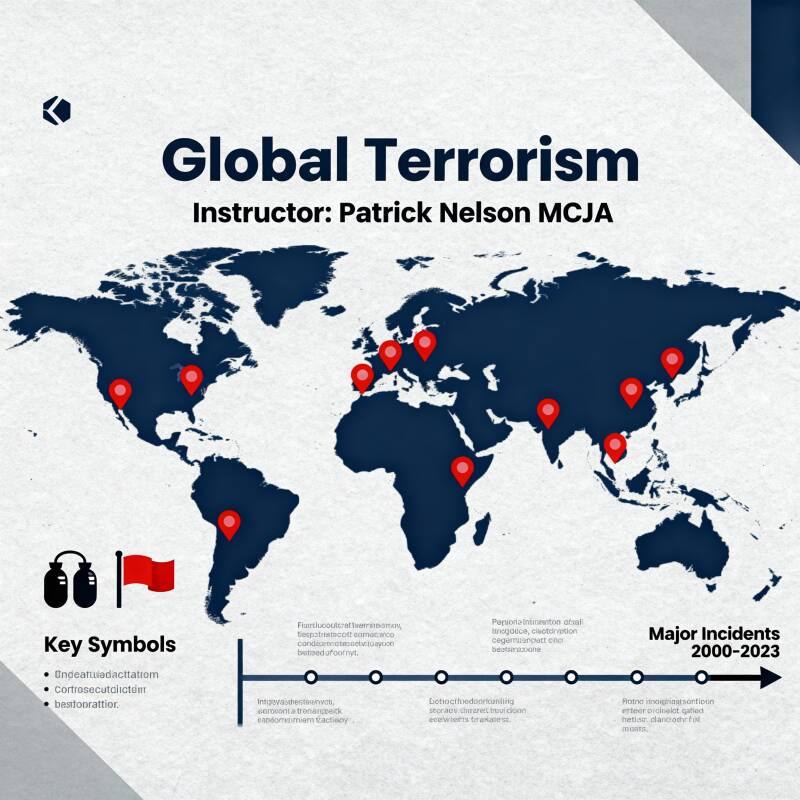
This course takes a look at global terrorism. We will explore what makes global terrorism what it is today by reviewing its history and the events that shaped it.

This course on homeland security takes a close look at what it means to protect a nation. We will explore the different dangers a country faces, from natural disasters to criminal activities. The goal is to give people a strong understanding of how to keep a country safe and secure.

This course in asset protection and security encompasses a wide range of topics focused on safeguarding individuals, assets, and information. This field looks into the strategies, tactics, and technologies used to mitigate risks and ensure the safety of executives, dignitaries, and other high-profile individuals.